Key facts: Sewage Cleanup
- Sewage is Category 3 water under the IICRC S500 standard and can carry bacteria, viruses and parasites.
- Porous materials soaked by sewage, including carpet, pad, drywall and upholstered items, are generally discarded rather than cleaned.
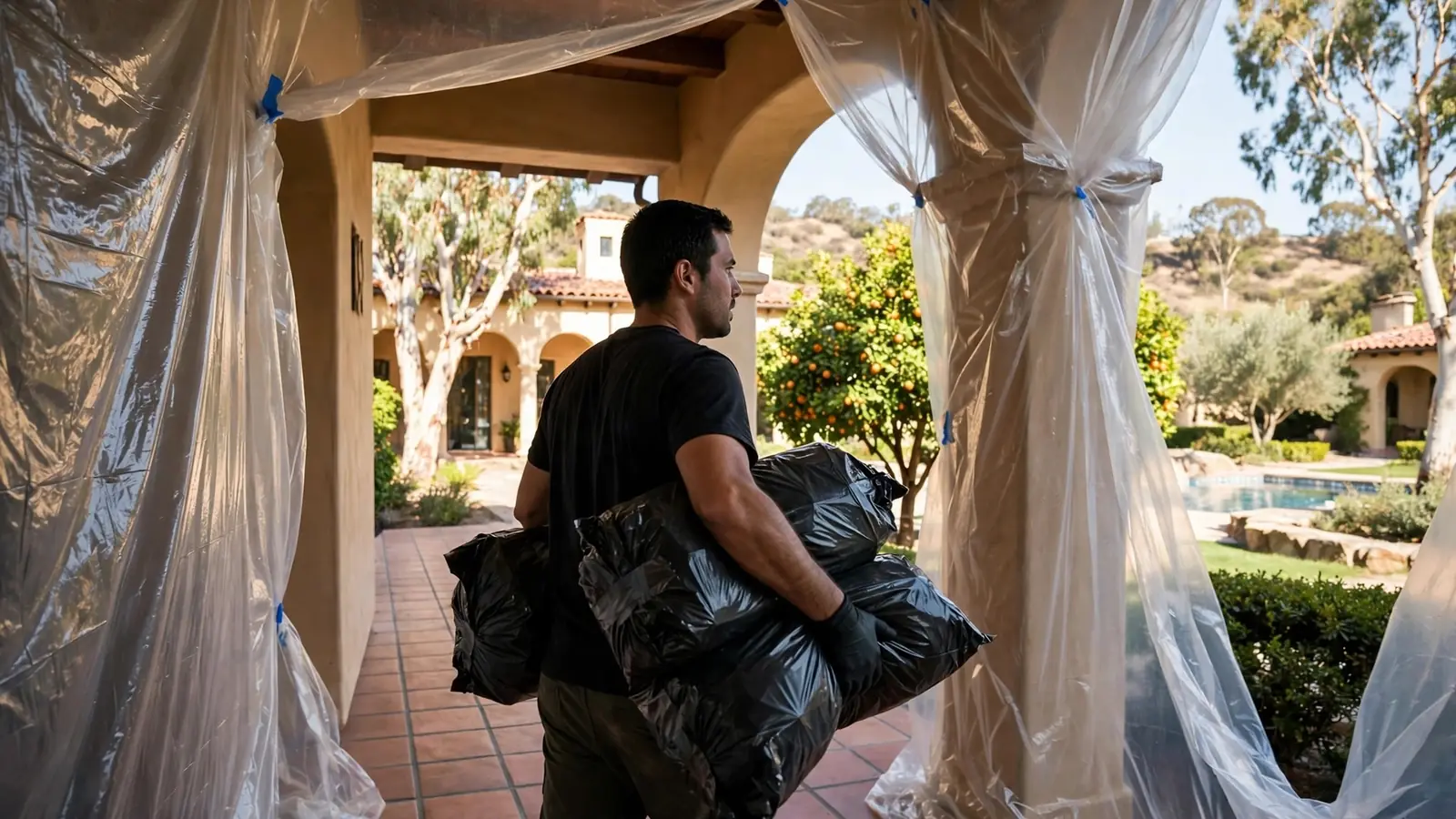
- Containment with plastic sheeting and negative air pressure keeps contaminated dust and aerosols from spreading during removal.
- Many homes in Rancho Santa Fe use private onsite wastewater (septic) systems, which can back up when tanks are full or leach fields are saturated.
- OSHA guidance for flood and sewage cleanup stresses protective gloves, boots, eye protection and respiratory protection.
In this page
- 1Why sewage is handled differently from any other water
- 2Signs of a sewage problem in the house
- 3What causes sewage backups in Rancho Santa Fe homes
- 4How a sewage cleanup is assessed and contained
- 5Common backup sources and what they usually affect
- 6How sewage cleanup is carried out
- 7What usually stays and what usually goes after sewage
- 8Safe first steps after a sewage backup
- 9What a sewage cleanup visit looks like
- 10Sewage problems on large Rancho Santa Fe properties
- 11Reducing the risk of a sewage backup
- 12How contractors decide what to clean and what to remove
- 13Problems that commonly come with a backup
- 14The difference between grey water and black water backups
- 15What a septic professional will usually check after a backup
- 16Why a sewage smell sometimes lingers and how it is traced
- 17Sewage cleanup questions from Rancho Santa Fe homeowners
What sewage cleanup involves
Why sewage is handled differently from any other water
Sewage cleanup is the removal and disinfection of everything wastewater has touched inside a home. It differs from clean-water work in almost every respect. The IICRC S500 standard puts sewage in Category 3, the most contaminated class, because it can carry bacteria, viruses and parasites that make people sick. [1] That classification means the goal is not just to dry things but to remove contamination safely and leave the space sanitary.
Practically, that changes three things. First, porous materials that absorbed sewage, such as carpet, pad, drywall, insulation and upholstered furniture, are generally discarded rather than dried. Second, the work area is contained so contaminated dust and droplets do not spread to clean parts of the house during removal. Third, the crew wears protective equipment and follows disinfection steps before any drying begins.
Sewage includes more than an overflowing toilet. Grey water from a washing machine or shower drain that backs up through a blocked line, and water that has passed through a septic system, can all carry contamination. If you are unsure about the source, treat it as sewage until a professional says otherwise.
The scope of a sewage job is often smaller in area than a flood but more intense per square foot. A careful contractor will spend real time on containment, on deciding exactly what must go, and on proving that surfaces left in place are clean.
Warning signs
Signs of a sewage problem in the house
Several drains slow at once
When showers, tubs and sinks all drain slowly together, the problem is usually in the main line or the septic system, not a single trap.
Gurgling from toilets
Toilets that gurgle when a sink drains or a washer empties are showing air pushed through a blocked line.
Water rising in the lowest drain
The lowest fixture in the house, often a shower or floor drain, is where a backup appears first.
Sewage odor indoors
A persistent sewer smell can come from a dry trap, a cracked line or wastewater that has already leaked somewhere hidden.
Wet, lush patches over the leach field
Unusually green, soggy ground over a septic field or tank suggests the system is not draining as it should.
Backups during long storms
If drains slow every time it rains for days, saturated ground may be stopping the septic field from draining.
Causes
What causes sewage backups in Rancho Santa Fe homes
Rancho Santa Fe homes reach wastewater disposal in two ways. Some are connected to a public sewer system; many others, especially on larger lots, rely on private septic systems. San Diego County regulates onsite wastewater systems through its Department of Environmental Health and Quality and its planning and permitting processes. [2] The cause of a backup usually depends on which kind of system the home has.
On septic properties, backups often come from a tank that has not been pumped on schedule, a clogged outlet filter, a failed pump in systems that need one, or a leach field that cannot accept water. Long wet periods are a common trigger: when the soil around the field is saturated, water has nowhere to go and comes back toward the house.
On sewer-connected homes, common causes include roots entering older clay or cast-iron lines, grease and wipes building up in the line, a sagging section where waste collects, or a blockage in the public main that pushes flow back into private lines.
Large houses add their own factors. Long horizontal drain runs, many bathrooms and guest houses on shared lines, and fixtures that are rarely used (where traps dry out and lines collect debris) all raise the chance of a problem. A plumber or septic professional should find and fix the cause; the restoration contractor handles the cleanup.
Assessment and containment
How a sewage cleanup is assessed and contained
- 1
Stop the flow
Nobody uses water in the house until the cause is found. On septic homes, that may mean calling a septic pumper; on sewer homes, a plumber may need to clear the line.
- 2
Keep people away
Children, pets and anyone with a weakened immune system stay out of the affected area until cleanup is complete.
- 3
Map the affected area
The contractor traces where wastewater reached, including under flooring, into adjacent rooms and into wall bases.
- 4
Set up containment
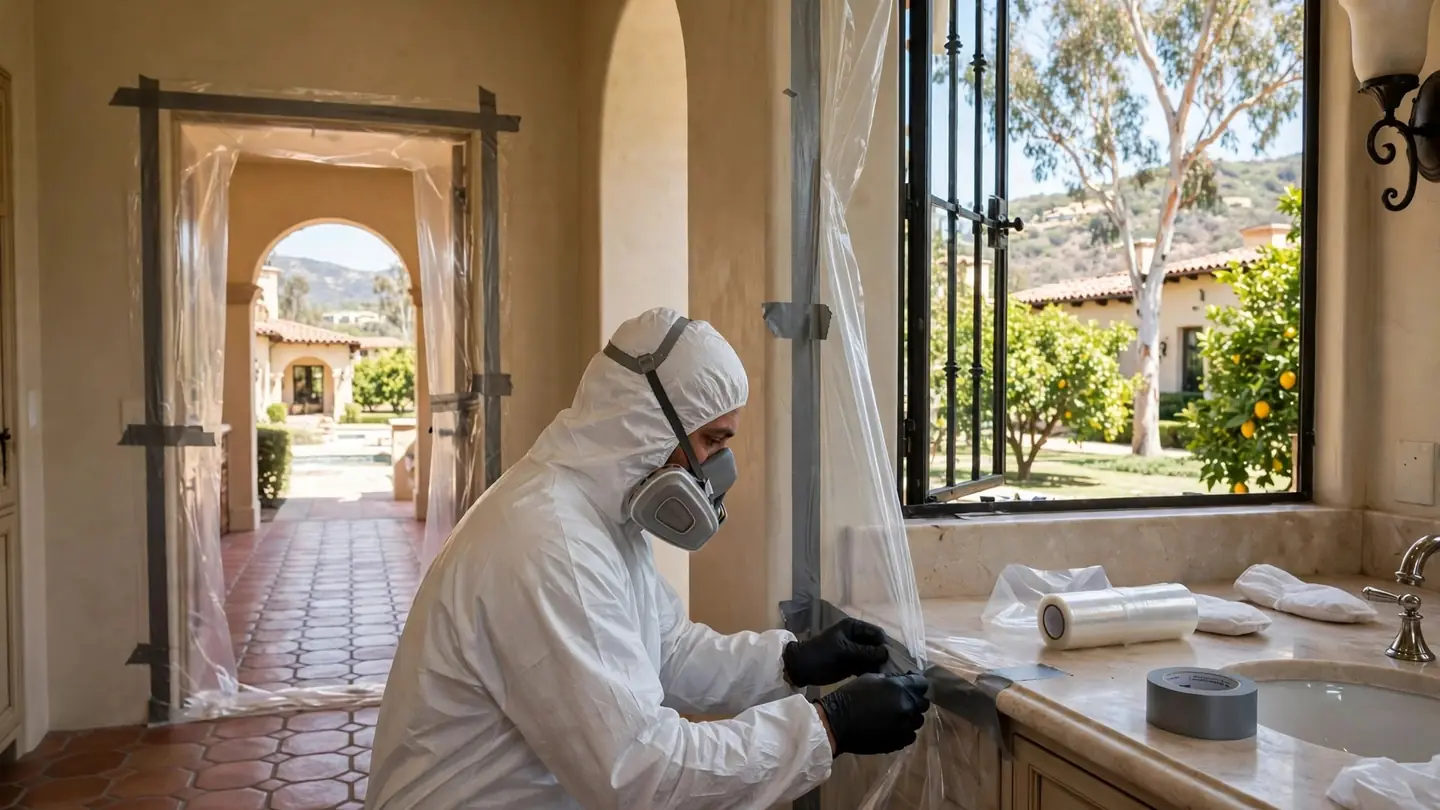
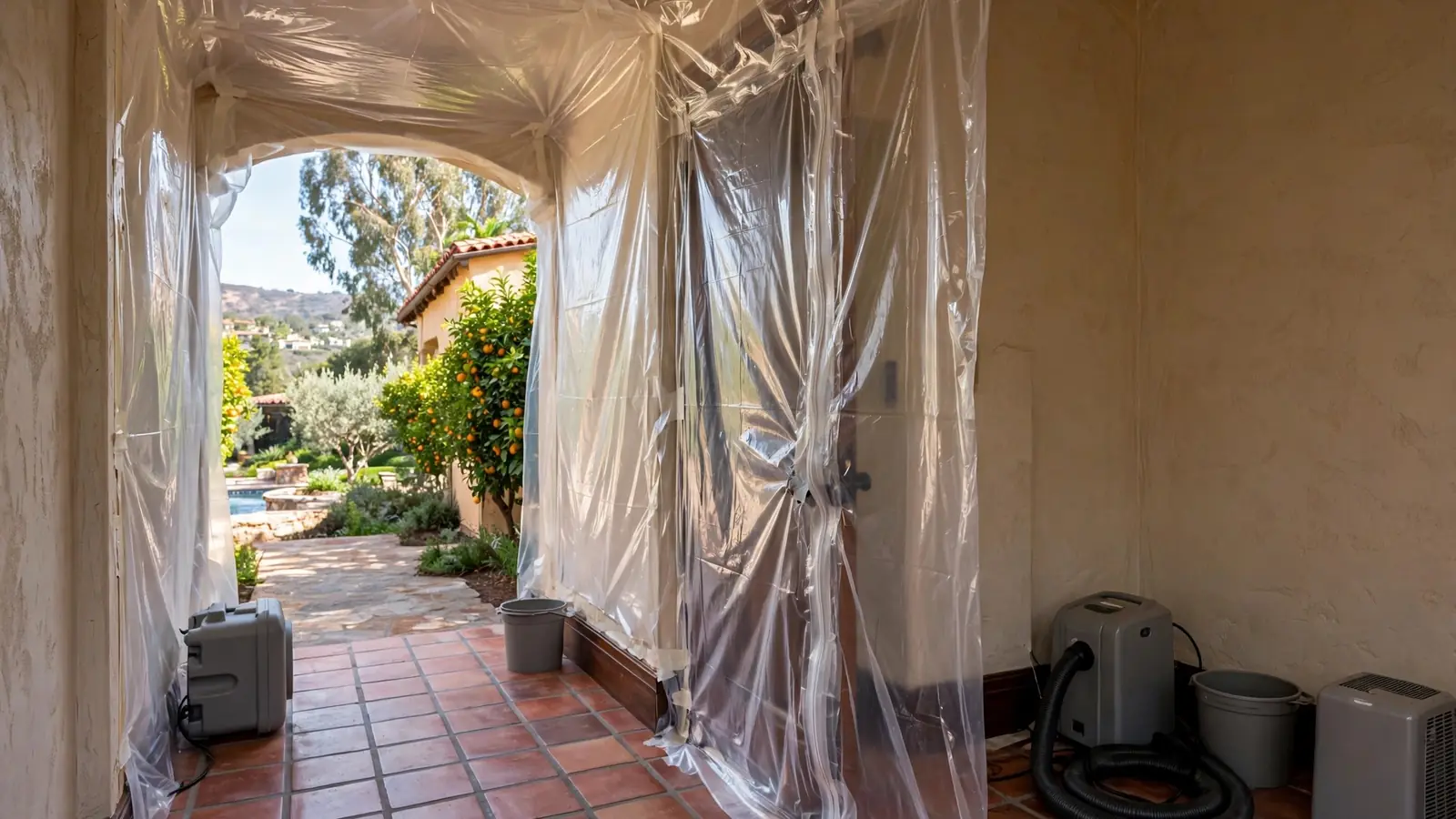
Plastic barriers seal the work area, and air scrubbers with HEPA filtration create negative pressure so air flows into the area rather than out.
- 5
Protect the crew
Gloves, boots, eye protection, protective suits and respirators suited to the conditions are used, consistent with OSHA guidance for sewage-related cleanup. [3]
- 6
Document conditions
Photos and notes record the affected area, the cause if known and what will be removed, for the homeowner and insurer.
Sources
Common backup sources and what they usually affect
| What happened | Where it shows up | Typical cleanup scope |
|---|---|---|
| Toilet overflow from a single blockage | One bathroom floor, sometimes the ceiling below | Floor, toilet base, lower wall, ceiling if it leaked through |
| Main line blockage | Lowest drains: showers, floor drains, lower-level baths | Several rooms on the lowest floor |
| Septic tank full or outlet clogged | Lowest fixtures, slow drains throughout | Lower bathrooms, sometimes laundry and adjacent rooms |
| Saturated leach field during storms | Repeated backups whenever it rains | Same as above, plus septic repair before cleanup holds |
| Washing machine discharge backing up | Laundry room floor, adjoining hall | Grey water cleanup, often Category 2 or 3 |
| Guest house or casita line blockage | Detached building bathroom | Contained cleanup in the outbuilding |
The cleanup
How sewage cleanup is carried out
With containment in place, the crew removes standing wastewater with pumps and extractors, sending it to a proper disposal point rather than a storm drain. Solid waste is removed and bagged. Porous materials that wastewater touched are cut out and removed in sealed bags: carpet and pad, drywall up to a measured height above the contamination line, insulation, and often lower cabinet boxes and baseboards.
Remaining surfaces are then cleaned in stages. A typical approach is to remove gross soil, wash with a detergent solution, rinse, then apply a disinfectant suited to the surface, giving it the dwell time the product label requires. Framing, slab, tile and other hard surfaces can usually be cleaned this way. Hard contents such as metal fixtures and glass can be cleaned and disinfected too.
Only after cleaning does drying start. Drying contaminated structure before it is cleaned can spread contamination through the air. Once surfaces are clean, air movers and dehumidifiers bring materials back to normal readings, with air scrubbers still running.
Some contractors finish with a check of the cleaned area, such as visual inspection under strong light and, in some cases, surface testing. Ask what verification the contractor uses before taking down containment.
Materials
What usually stays and what usually goes after sewage
| Material | Usual outcome | Reason |
|---|---|---|
| Carpet and pad | Discarded | Cannot be reliably disinfected after sewage contact |
| Drywall and insulation in the affected zone | Discarded | Absorb contamination; cut above the contamination line |
| Vinyl and laminate flooring | Usually discarded | Wastewater gets underneath and into the core |
| Ceramic and porcelain tile | Cleaned | Hard surface; grout and setting bed need checking |
| Natural stone | Case by case | Porous stone can absorb contamination; specialist cleaning may be needed |
| Solid wood framing | Cleaned and dried | Washed, disinfected and dried to normal readings |
| Upholstered furniture and mattresses | Discarded | Foam and fabric hold contamination |
| Clothing and linens | Hot washed or discarded | Washable items can often be laundered on a hot cycle |
Before the crew arrives
Safe first steps after a sewage backup
The most important thing you can do is to stop adding water and keep people away. Avoid touching wastewater where you can.
If you must enter the area, wear waterproof boots and gloves, and wash your hands carefully afterward. Do not use household fans to dry the area; they can spread contaminated droplets.
- Stop using sinks, toilets, showers and appliances
- Keep children and pets out of the area
- Close doors to the affected rooms
- Turn off HVAC that pulls air from the area if you can
- Photograph the area from a safe distance

The visit
What a sewage cleanup visit looks like
Sewage visits start with questions: where the water came from, whether the house is on septic or sewer, how long the problem has been going on, and who in the household might be especially vulnerable. The contractor will look at the affected area from outside the contamination zone first.
Once the cause is being handled by a plumber or septic professional, the crew sets up containment. In a large home this usually means sealing a bathroom or a section of a lower floor with plastic and taping it to floor and ceiling, with a zippered entry. Air scrubbers are placed to keep the area under negative pressure.
Removal and cleaning can often be completed in a day or two for a single bathroom, longer for larger areas. Drying follows. You should expect bagged debris to leave the property, and you should be told where wastewater was disposed of.
Before containment comes down, ask the contractor how they verified the area is clean, and keep their notes and photos. If the cause was a septic issue, keep the septic contractor's report with your restoration records.
Talk to a local contractor
Questions about sewage cleanup?
One call connects you with an independent water damage restoration contractor who serves Rancho Santa Fe.
Rancho Santa Fe specifics
Sewage problems on large Rancho Santa Fe properties
Because many Rancho Santa Fe homes sit on lots large enough for septic systems, septic-related backups are a real local factor. A system serving a large house with many bathrooms, frequent guests or a pool house works hard. When a tank is overdue for pumping or a leach field is near the end of its life, a busy weekend or a long storm can tip it into backing up.
Repairs to septic systems in unincorporated San Diego County involve county environmental health and permitting. That is work for a licensed septic contractor, and it should happen before or alongside cleanup, since cleaning a bathroom that backs up again next week does not help.
Large homes also have long sewer laterals or drain lines to reach the street or the tank, sometimes passing under hardscape and landscaping. Root intrusion from mature trees, including the eucalyptus that Rancho Santa Fe is known for, is a common cause of line problems on older properties.
Detached guest houses and pool houses may share a line with the main house or have their own. Knowing how your property's wastewater is routed helps everyone find the cause faster. If you have plans or a septic layout, keep them where staff and contractors can find them.
Prevention
Reducing the risk of a sewage backup
Most backups give some warning: slow drains, gurgling, odors or soggy ground. Acting on those signs is the best prevention.
- Have the septic tank inspected and pumped on the schedule your septic professional recommends
- Know where your tank, distribution box and leach field are, and keep heavy vehicles off them
- Keep wipes, grease and other non-flushables out of drains
- Have older sewer laterals camera-inspected for roots and sags
- Consider a backwater valve on sewer-connected homes where a plumber recommends one
- Run water in rarely used fixtures in guest houses to keep traps full
Clean or remove
How contractors decide what to clean and what to remove
With sewage, the bar for keeping porous materials is high, and for good reason. The question is not just whether a material can be made to look clean but whether it can be made reliably sanitary. For carpet, pad, drywall and upholstered items, the answer is almost always no.
Hard surfaces are a different story. Tile, sealed stone, metal, glass and solid wood framing can usually be cleaned and disinfected. Some natural stone is porous enough that it needs specialist cleaning or, in some cases, replacement.
If an item is valuable or sentimental, ask the contractor to set it aside and discuss options before discarding it. Specialists can sometimes clean items a general crew would throw away.
Often paired with sewage
Problems that commonly come with a backup
Storm-related flooding
Long storms that saturate soils can cause both indoor flooding and septic backups at the same time.
Hidden moisture
Wastewater can travel under flooring and into wall bases beyond the visible area. Our guide on hidden moisture explains how it is found.
Odor that lingers
If contaminated material is missed, odor returns. Thorough removal is the real cure, not fragrance.
Mold growth
Damp, organic-rich conditions encourage mold if drying is delayed after cleaning.
Grey water and black water
The difference between grey water and black water backups
Restoration crews sometimes talk about grey water and black water. Grey water is wastewater from sinks, showers, tubs and washing machines. Black water contains toilet waste. In terms of the IICRC water categories, grey water often starts as Category 2, meaning it carries enough contamination to cause illness, while black water is Category 3 from the moment it leaves the drain.
The difference narrows quickly in practice. Grey water that sits warm and still for a day or two can degrade to Category 3 as bacteria multiply. And a main line backup usually mixes both kinds, because everything upstream of the blockage drains to the same place. That is why most contractors treat any drain backup on a lowest floor as Category 3 unless they can show otherwise.
For homeowners, the useful takeaway is simple. A washing machine overflow caught within minutes on a tile floor is a manageable cleanup. Water that has come up through a floor drain, a toilet or a shower, or that has been sitting, deserves full sewage precautions.
For septic owners
What a septic professional will usually check after a backup
- 1
Tank liquid level
A level well above the outlet means the tank or the field beyond it is not draining. A normal level points to a blockage between the house and the tank.
- 2
Outlet filter and baffles
A clogged effluent filter is a common and simple cause. Damaged baffles let solids reach the field and shorten its life.
- 3
Pump and alarm, if fitted
Systems with a pump tank rely on a working pump and float. A failed pump can back the system up within a day.
- 4
Distribution box and field
Ponding, soggy ground or a strong odor over the field suggests the soil is no longer accepting water at a normal rate.
- 5
Records and next steps
The septic professional should leave a written report. Keep it with the restoration records for your insurer and for future buyers.
Odor after cleanup
Why a sewage smell sometimes lingers and how it is traced
A properly cleaned area should not smell of sewage once it is dry. When an odor lingers, it almost always means contaminated material was missed: wastewater that ran under a cabinet toe-kick, into the bottom plate of a wall beyond the cut line, or under a threshold into the next room. Masking the smell with fragrance or ozone does not fix that; finding and removing the source does.
A dry trap in a rarely used guest bath can also let sewer gas into a house and is easy to rule out by running water in every fixture. If the smell persists after both checks, a plumber can smoke-test the drain system to find a cracked line or failed seal inside a wall.
FAQ
Sewage cleanup questions from Rancho Santa Fe homeowners
Is it safe to clean up a small sewage spill myself?
A very small spill on a hard floor can be cleaned with gloves, boots and a disinfectant. Anything that reached carpet, drywall or a larger area should be handled by a professional crew.
Can my carpet be cleaned after a sewage backup?
Generally no. Carpet and pad that absorbed sewage are normally discarded because they cannot be reliably disinfected.
Who fixes the cause of the backup?
A plumber for sewer line problems, or a septic contractor for tank and field problems. The restoration contractor handles the cleanup.
How long does sewage cleanup take?
A single bathroom can often be cleaned in a day or two, with drying after. Larger areas take longer. The job should end with verified clean surfaces and normal moisture readings.
Can I stay in the house?
Usually, if the affected area is contained and you avoid it. Vulnerable people may want to stay elsewhere until cleanup is complete.
Can someone come at night or on a holiday?
Yes. Calls to this line are answered around the clock, and you are connected with an independent contractor who can talk through next steps.
Does insurance cover sewage backup?
It varies. Some policies exclude sewer or septic backup unless you have a specific endorsement. Check your policy and talk to your insurer early.
What should I ask the contractor on the call?
Ask how they contain the area, what protective gear they use, how they decide what to remove, which disinfectant they use and how they verify the area is clean.
Sources and citations
- [1]IICRC S500 Standard for Water Damage Restoration
- [2]San Diego County Department of Environmental Health and Quality
- [3]OSHA: Flood cleanup hazards
- [4]U.S. EPA: Flooding and your home
- [5]CDC: Mold and your health
- [6]U.S. EPA: Mold cleanup in your home
- [7]San Diego County Planning & Development Services
- [8]Ready.gov: Floods