Key facts: The Covenant
- The Covenant is the area governed by the Rancho Santa Fe Association under the community's protective covenant, first adopted in the 1920s.
- Architect Lilian Rice designed many of the community's early buildings in the Spanish Colonial Revival style.
- The eucalyptus groves that define the area were planted in the early 1900s by a Santa Fe Railway subsidiary.
- Exterior changes inside the Covenant generally require review by the Rancho Santa Fe Association.
- Covenant rebuilds need County building permits, because Rancho Santa Fe has no city government of its own.
In this page
- 1Covenant addresses served by this line
- 2Why Covenant homes are a category of their own
- 3Building details in Covenant homes that change how water behaves
- 4Where water damage usually begins in a Covenant home
- 5What a contractor should check in a Covenant house
- 6Water damage clues in Covenant homes and what they often mean
- 7How restoration usually works in an older Covenant house
- 8Large lots, gates and long driveways in the Covenant
- 9How the seasons shape water damage in the Covenant
- 10Reducing water damage risk in a Covenant home
- 11Restoration services Covenant homeowners often need
- 12Leaks in remodeled Covenant kitchens and baths
- 13Protecting original features in historic Covenant homes
- 14How timing changes a Covenant water damage job
- 15When water crosses property lines in the Covenant
- 16A typical first week after a Covenant water loss
- 17Outbuildings on Covenant properties
- 18Useful things for Covenant owners to ask on the call
- 19Hard water, long service lines and shutoffs on Covenant lots
- 20Water damage on Covenant horse properties
- 21Collections inside Covenant homes
- 22Covenant water damage questions
Covered area
Covenant addresses served by this line
This line connects callers in the Rancho Santa Fe ZIP codes covered by our contractor network. If your address is outside them, the call may not connect to a local contractor.
- Rancho Santa Fe ZIP 92067, including homes within the Rancho Santa Fe Association's Covenant boundary [3]
About the Covenant
Why Covenant homes are a category of their own
Rancho Santa Fe began as a planned community in the 1920s on land a Santa Fe Railway subsidiary had planted with eucalyptus, hoping to grow railroad ties. The trees proved poor for the purpose, but the groves remained and became the setting for a community built around large lots, riding trails and a consistent architectural character. Homeowners agreed to a protective covenant, and the Rancho Santa Fe Association still administers it.
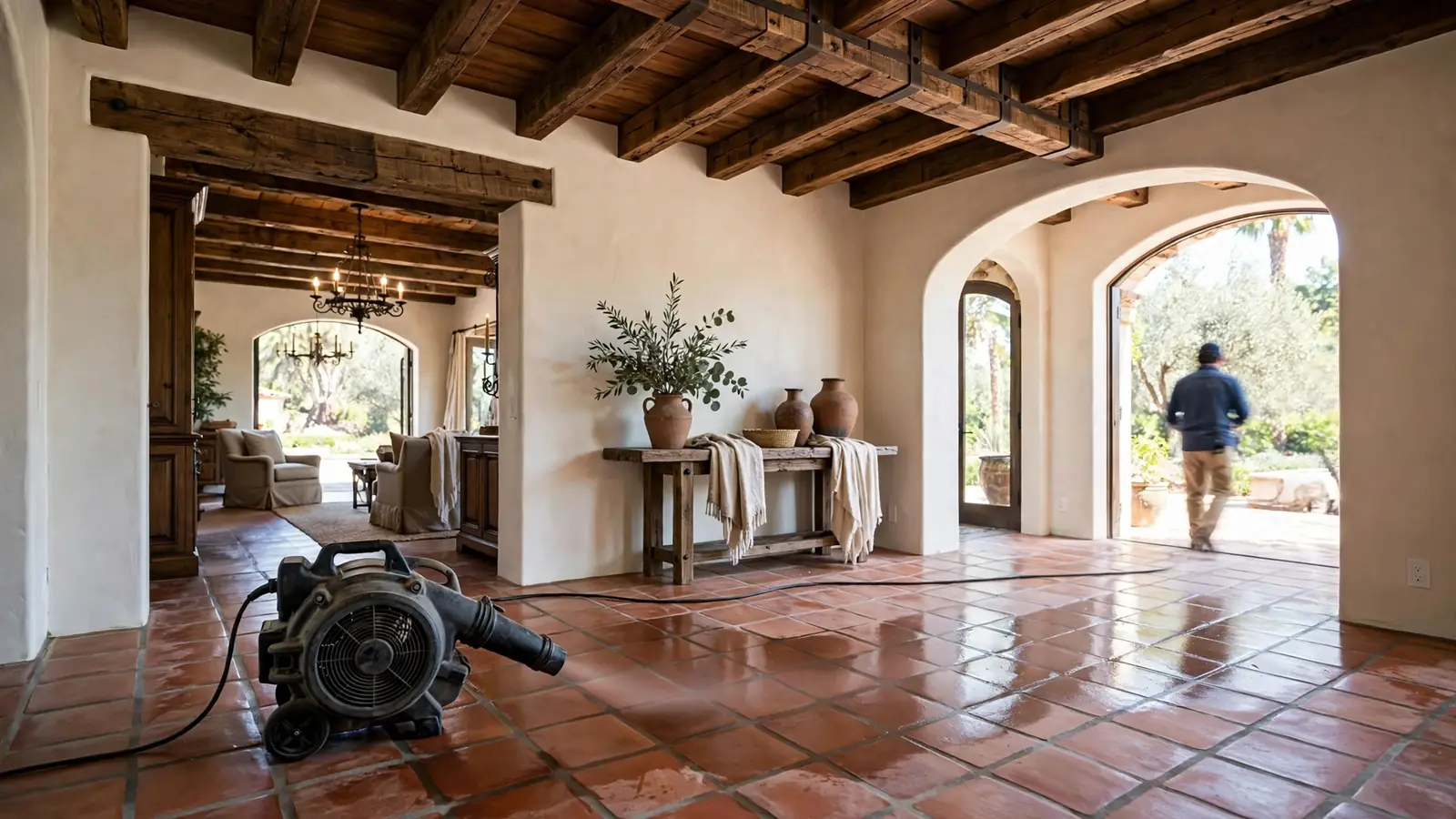
That history shows up in the housing. Some Covenant homes date to the community's founding years and were designed by Lilian Rice or architects working in the same Spanish Colonial Revival idiom: thick plastered walls, deep window reveals, clay tile roofs, wood beams and tile floors. [2] Around them sit homes from every decade since, from mid-century ranch houses to very large recent estates.
For water damage, the mix matters. A 1930s plaster-and-masonry house and a 2010s steel-and-glass estate fail in different places and dry at very different speeds. What they share is scale, valuable finishes and a community that expects repairs to be done with care.
Construction
Building details in Covenant homes that change how water behaves
Thick plaster over masonry or lath
Plaster absorbs and releases water slowly. It often survives a leak that would ruin drywall, but needs long, gentle drying.
Clay tile roofs and flat sections
Tile roofs shed water well, but the underlayment beneath ages. Flat roof sections and parapets common in Spanish styles can pond water.
Saltillo and terracotta floors
Handmade clay tiles are porous. Sealers wear, and water can darken tiles and loosen the setting bed.
Exposed beams and wood ceilings
Water above a beamed ceiling travels along the beams and stains wood that is hard to match.
Additions from different decades
Many homes have been extended several times. Joints between old and new sections are frequent leak points.
Long service runs
Supply lines, septic lines and irrigation mains run long distances across large lots, often under mature trees.
How leaks start here
Where water damage usually begins in a Covenant home
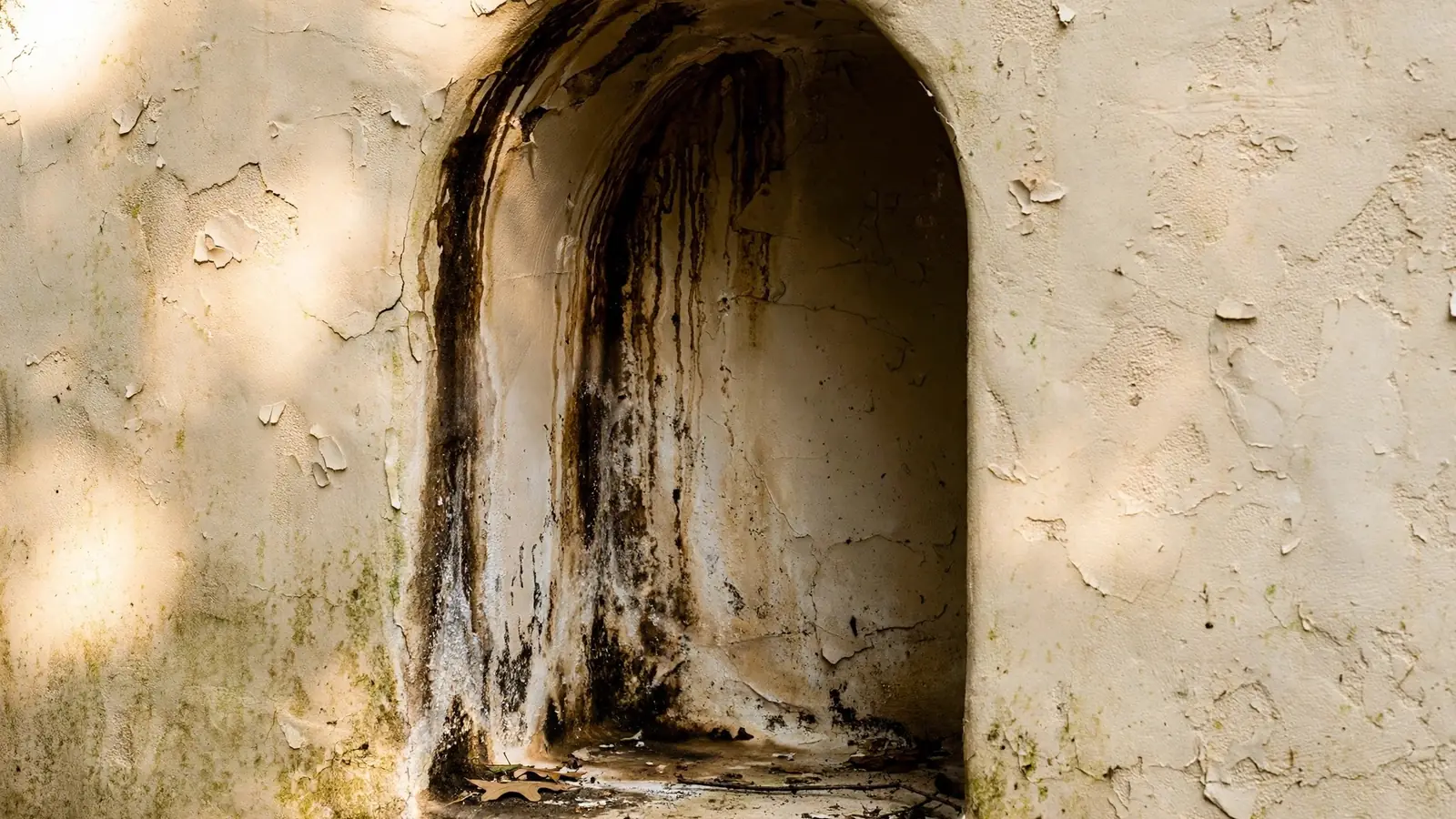
In older Covenant homes, the classic sources are aging supply plumbing, roof underlayment that has outlived its tiles, and window and door openings where original or early replacement frames meet plaster. Flat roof sections behind parapets can hold water if their drains clog with eucalyptus leaves, which fall all year.
Newer estates tend to have more fixtures and more appliances: multiple kitchens, laundry rooms on several floors, steam showers, wine rooms with cooling units, and outdoor kitchens. Each fixture adds a supply line and a drain, and most leaks in large modern homes start at one of them.
Across both, the landscape plays a role. Mature eucalyptus and other trees send roots toward any water source, including sewer and septic lines and irrigation mains. Irrigation itself, essential for keeping large grounds green, can soak walls if heads are misaligned or lines break near the house.
Assessment
What a contractor should check in a Covenant house
- 1
Identify the building's age and construction
Plaster over masonry, plaster over lath and modern drywall dry differently; the plan starts with knowing which you have.
- 2
Trace the water path
In homes with additions and level changes, water can cross from one section to another through old joints.
- 3
Test before cutting older materials
Homes built before 1980 may have materials containing asbestos or lead paint. Testing comes before any demolition.
- 4
Map moisture in plaster and tile
Readings at plaster bases and tile grout lines show how far water traveled under the surface.
- 5
Check the roof and drains if rain was involved
Parapet drains, scuppers and valleys clogged with leaves are common culprits.
- 6
Record finishes for matching
Photos of plaster texture, tile patterns and wood finishes help the repair team match them later.
Common findings
Water damage clues in Covenant homes and what they often mean
| What you see | Likely cause | Notes |
|---|---|---|
| Stain spreading along a beamed ceiling | Roof underlayment or upstairs bathroom leak | Water follows beams; source may be some distance away |
| Darkened Saltillo tiles near a wall | Supply leak in the wall or irrigation outside | Porous clay tiles hold water; slow to dry |
| Plaster bubbling below a window | Window flashing or sill failure | Common at old window openings |
| Water after rain on a flat roof section | Clogged parapet drain or scupper | Eucalyptus leaves are a frequent cause |
| Slow drains in several bathrooms | Septic issue or roots in the line | Plumber or septic contractor first |
| Wet ground near the house in dry weather | Broken irrigation or supply line | Can soak foundation and wall bases |
Restoration approach
How restoration usually works in an older Covenant house
Restoration in an older Covenant home leans heavily toward drying in place. Plaster over masonry can usually be saved if the water was clean, even after significant wetting. Losing original plaster is a real setback, because matching hand-troweled texture is a skilled trade, and patches can show for years. Contractors who know older homes will set up gentle air movement and dehumidification and accept a longer drying timeline.
Tile and stone floors are usually dried in place too, with attention to the setting bed underneath. Sealers should not be reapplied until readings confirm the tile and bed are dry, otherwise moisture is trapped and the tiles can loosen or show white mineral deposits.
Wood elements, such as beams, doors and casework, are dried slowly. Fast drying with heat can check or split old wood. Stain and finish touch-ups are better done after the wood has fully stabilized.
Where materials do have to be removed, careful removal matters: numbered trim, tile lifted in sections that can be reused, and plaster cut in clean lines that a plasterer can repair.
Grounds and access
Large lots, gates and long driveways in the Covenant
Covenant properties are large, often several acres, with long drives, gates and sometimes separate guest houses, staff quarters and barns. Crews need to know where to park, how to get equipment to the affected area and who can let them in.
On your call, mention the gate arrangements, which building is affected, how far it is from where a truck can park, and whether there are animals on the property.
- Share gate and access details on the call
- Name a contact who can meet the crew
- Point out septic tank and leach field locations
- Mention horses, dogs or other animals

Seasonal patterns
How the seasons shape water damage in the Covenant
Most of the year is dry, and indoor leaks from plumbing and appliances dominate. The rainy season, typically from late fall into spring, brings roof, window and drainage problems, especially in the first big storm after months of leaf fall. Atmospheric river events can deliver a lot of rain in a short time.
Irrigation runs hardest in the hot months, and that is when misdirected sprinklers and broken lines are most likely to wet walls. Late summer and fall bring Santa Ana wind conditions, which have no direct water link but increase leaf and debris drop into gutters and drains, setting up problems for the first rain.
Prevention
Reducing water damage risk in a Covenant home
- Have the roof underlayment and flashing inspected, not just the tiles
- Clear parapet drains, scuppers and gutters of eucalyptus leaves before and during the rainy season
- Camera-inspect sewer or septic lines under mature trees for root intrusion
- Check irrigation spray patterns so water does not hit plaster walls
- Fit leak sensors near water heaters, laundry rooms and wine room cooling units
- Label every water shutoff on the property, including guest houses and barns
Services
Restoration services Covenant homeowners often need
Water damage cleanup
Extraction and careful removal in homes with plaster, tile and wood finishes.
Mitigation and drying
Long, gentle drying of plaster, stone and old wood, measured with meters.
Sewage cleanup
Septic or sewer backups on large lots, with containment and disinfection.
Flood cleanup
Storm runoff entering under doors or through lower walls during heavy rain.
Talk to a local contractor
Questions about the covenant?
One call connects you with an independent water damage restoration contractor who serves Rancho Santa Fe.
Kitchens and baths
Leaks in remodeled Covenant kitchens and baths
Many Covenant homes, even the oldest, have remodeled kitchens and bathrooms. That combination can be tricky: modern fixtures and supply lines sit inside old walls, and connections between new and old plumbing are frequent leak points. A dishwasher or refrigerator line failure can soak a new kitchen floor and seep into old plaster walls nearby.
When a remodeled space is damaged, the contractor will usually treat the new materials, such as drywall, cabinetry and engineered flooring, as standard, while handling surrounding original materials with more care. Keep remodel records, product names and contractor details handy; they help with matching.
Steam showers, large soaking tubs and curbless showers are common in recent bathroom remodels. A failed shower pan or waterproofing membrane can leak slowly into the floor below for months. Signs include stains on the ceiling below, loose tiles and a musty smell.
Original details
Protecting original features in historic Covenant homes
Original features are much of what makes an early Covenant home valuable: hand-made tile, wrought iron, carved doors, beamed ceilings and plaster details. When water threatens them, the priority is to stop further damage and dry them slowly and evenly. Removing original features should be a last resort and done by someone who can reinstall them.
If a feature is badly damaged, a conservator or specialist craftsman may be able to repair it. Take photographs of original details before work begins and keep any removed pieces safe and labeled. Some homeowners also find it useful to talk with the Association early about anything visible from outside.
By season
How timing changes a Covenant water damage job
| Season | Common sources | Drying conditions |
|---|---|---|
| Late fall to spring | Roof, windows, drains, runoff | Cooler and damper; dehumidifiers work harder |
| Late spring | Plumbing, appliances | Mild; often good drying conditions |
| Summer | Irrigation, pool equipment, AC condensate | Warm; dries well with dehumidification |
| Early fall | Plumbing, leaf-clogged drains in first rain | Warm and dry outside; Santa Ana days are very dry |
Neighbors and shared features
When water crosses property lines in the Covenant
With large lots, water rarely crosses directly from one house to another, but it can travel across land. Runoff from a neighboring property, a shared drainage channel or a broken irrigation main on a nearby lot can reach your home during storms or when lines fail. If you suspect water is coming from off your property, photograph it and note where it enters.
Shared private roads and drainage features may be managed by neighbors jointly or by the Association. Check who is responsible before arranging repairs to anything outside your own lot.
Week one
A typical first week after a Covenant water loss
- 1
Day one
Source stopped, extraction completed, hazards checked, moisture mapped and photographed, drying equipment started.
- 2
Days two and three
Any testing for older materials completed; controlled removal of anything that cannot be dried.
- 3
Days three to seven
Regular monitoring visits; equipment repositioned as areas dry; plaster and stone tracked closely.
- 4
End of week one
Fast-drying areas finished; slower plaster and tile areas may continue into the following week.
- 5
After drying
Repair planning with your builder or the contractor, including any Association review for exterior work.
Guest houses and barns
Outbuildings on Covenant properties
Guest houses, staff quarters, pool houses and barns are common on Covenant estates. They are often older than the main house or newer additions, and they are used less often. Leaks in them may go unnoticed for longer, which increases the chance of mold and makes drying more involved.
Outbuildings may have their own water heaters, septic connections and electrical panels. Make sure staff or caretakers know where these shutoffs are. If water damage is found in an outbuilding, mention on your call how long it may have been unused.
On your call
Useful things for Covenant owners to ask on the call
These questions help you understand how a contractor will handle an older or high-value home.
- How do you approach drying plaster over masonry?
- Do you test for asbestos and lead before cutting into older materials?
- How will you protect tile, stone and wood floors along the work route?
- Can you work around Association requirements if exterior repairs are needed?
- How will you document finishes for matching?
- Are you licensed with the California Contractors State License Board?
Water supply
Hard water, long service lines and shutoffs on Covenant lots
Depending on location, Covenant homes buy water from the Santa Fe Irrigation District or the Olivenhain Municipal Water District. [6] [5] The Santa Fe Irrigation District reports hardness in the range of about 275 parts per million, which is hard water by common classifications. Over years, scale builds up in valves, fixture cartridges, water heaters and softener equipment, and stiff or seized valves are a frequent discovery when someone tries to shut off water in a hurry.
On large lots the meter can be a long way from the house, and the main supply line may run under lawns, drives and groves before it reaches the building. Many properties also have separate lines to guest houses, barns, pools and irrigation. Knowing which valve controls which building, and labeling them, saves real time when something fails.
If a supply leak is suspected underground, the meter is a useful test: with every fixture and irrigation zone off, a moving meter means water is escaping somewhere between the meter and the taps.
Horse properties
Water damage on Covenant horse properties
Riding trails and private stables are part of the Covenant's identity, and many properties keep horses. Barns bring automatic waterers, wash racks, hose bibs and large roof areas, and their tack rooms and offices are often finished spaces with electrical outlets and stored equipment. A stuck waterer valve or a broken line can flood a barn aisle overnight.
Restoration in a barn has to account for animals, feed and bedding. Wet hay and shavings usually go, tack is dried slowly, and equipment is placed where horses cannot reach it. Let the contractor know about animals on the call so they arrive prepared.
Wine rooms and libraries
Collections inside Covenant homes
Many Covenant homes hold libraries, art and wine that matter as much to their owners as the house itself. A leak above a library or a failed cooling unit in a wine room puts those collections at risk quickly. Books and papers swell and stain within hours, and framed works on an exterior wall can be affected by humidity even when water never touches them.
When a collection is involved, mention it on your call. A contractor can plan to move or protect it first, set up drying so humidity in the room stays controlled, and recommend document, art or textile specialists for anything already wet. Photograph shelves and walls before anything is taken down so it can all go back in the right place.
FAQ
Covenant water damage questions
Does interior water damage work need Association approval?
Interior cleanup and drying usually do not. Exterior changes inside the Covenant generally need review. Ask the Association if you are unsure.
Can original plaster really be saved?
Often yes, if the water was clean and drying starts promptly. Plaster takes longer to dry than drywall but tolerates water better.
Who issues building permits here?
Rancho Santa Fe is unincorporated, so building permits come from San Diego County Planning & Development Services. [4]
Are eucalyptus roots really a plumbing problem?
Roots of large trees, including eucalyptus, can enter older sewer and septic lines through joints. A camera inspection shows whether they have.
My house is very old. Is it safe to cut walls?
Test first. Homes built before 1980 may contain asbestos or lead paint. A good contractor will arrange testing before demolition.
Can someone come out at night?
Calls to this line are answered around the clock and connect you with an independent contractor who can talk through next steps.
Which water district serves my home?
Covenant homes are served by the Santa Fe Irrigation District or the Olivenhain Municipal Water District depending on location. Your water bill shows which.
Should I reseal my tile floor after drying?
Only after readings confirm the tile and setting bed are dry. Sealing too early traps moisture.
What if water came from a neighbor's land?
Photograph where it enters and talk with your neighbor and insurer. Shared drainage may be managed jointly or by the Association.
How long does drying take in an old house?
Plaster and tile can take noticeably longer than drywall. Expect the contractor to monitor until readings match dry areas.
Sources and citations
- [1]Wikipedia: Rancho Santa Fe, California
- [2]Wikipedia: Lilian Jenette Rice
- [3]Rancho Santa Fe Association
- [4]San Diego County Planning & Development Services
- [5]Santa Fe Irrigation District
- [6]Olivenhain Municipal Water District
- [7]San Diego County Department of Environmental Health and Quality
- [8]IICRC S500 Standard for Water Damage Restoration
- [9]U.S. EPA: Lead renovation, repair and painting
- [10]U.S. EPA: Protect your family from asbestos
- [11]National Weather Service San Diego