Key facts: The Bridges
- The Bridges at Rancho Santa Fe is a guard-gated golf community of about 540 acres with a course designed by Robert Trent Jones II.
- Homes are mostly large custom builds on hillside and canyon-edge lots, many with lower levels set into the slope.
- Below-grade walls depend on waterproofing and drainage; saturated soil during long storms puts pressure on them.
- Water from outside a home is treated as Category 3 under the IICRC S500 standard.
- Lower-level waterproofing and drainage repairs in The Bridges may need building permits from San Diego County.
In this page
- 1The Bridges ZIP code covered
- 2A golf community built into the hills
- 3Features of homes in The Bridges that affect water damage
- 4Common sources of water damage in The Bridges
- 5What a contractor should look at in a Bridges home
- 6Water damage clues in The Bridges homes
- 7How restoration works in a multi-level Bridges home
- 8Getting into The Bridges with equipment
- 9Rain and irrigation through the year in The Bridges
- 10Practical prevention for Bridges homeowners
- 11Restoration services Bridges homeowners ask about
- 12Using leak sensors and automation data
- 13Lower-level wine rooms and theaters in The Bridges
- 14How the time of year affects a Bridges water job
- 15Living next to the fairways and canyons
- 16A typical first week after a Bridges water loss
- 17Guest suites and detached casitas
- 18Useful questions for Bridges homeowners to ask
- 19Upstairs laundry rooms and the floors beneath them
- 20Window walls, stone cladding and water entry
- 21Mechanical rooms, recirculation pumps and water treatment
- 22Keeping records in a complex claim
- 23How finishes common in The Bridges respond to water
- 24Preparing a Bridges home for time away
- 25Questions from homeowners in The Bridges
Covered area
The Bridges ZIP code covered
Homes in The Bridges carry the Rancho Santa Fe 92091 ZIP code, which is covered by the contractor network this line connects to.
- Rancho Santa Fe ZIP 92091
About The Bridges
A golf community built into the hills
The Bridges was developed from the late 1990s into the 2000s as a guard-gated club community east of the original Rancho Santa Fe village area. Its course winds through canyons and over water, and the community takes its name from the bridges that carry the course across them. Home sites sit along ridgelines, canyon edges and fairways.
Most homes are large custom or semi-custom builds, many in Tuscan, Spanish, Mediterranean or contemporary styles, with stone, plaster, wide-plank wood and expansive glass. Because lots slope, many homes have lower levels, walk-out basements, wine cellars, theaters or guest suites partly below grade.
For water damage, the terrain and the size of the homes are the two big factors. Water that escapes on an upper floor has a long way to travel and many places to hide. Water outside follows the slope, and on a hillside lot that often means toward a retaining wall or the uphill side of a lower level.
Construction
Features of homes in The Bridges that affect water damage
Lower levels set into the slope
Walk-out lower floors have one or more walls against soil, relying on waterproofing and drains to stay dry.
Multiple floors of plumbing
Bathrooms, laundry and bar sinks on several levels mean water from above can reach finished ceilings below.
Stone and wood finishes
Imported stone, hand-scraped wood and plaster dominate interiors, and all react differently to water.
Retaining walls and terraces
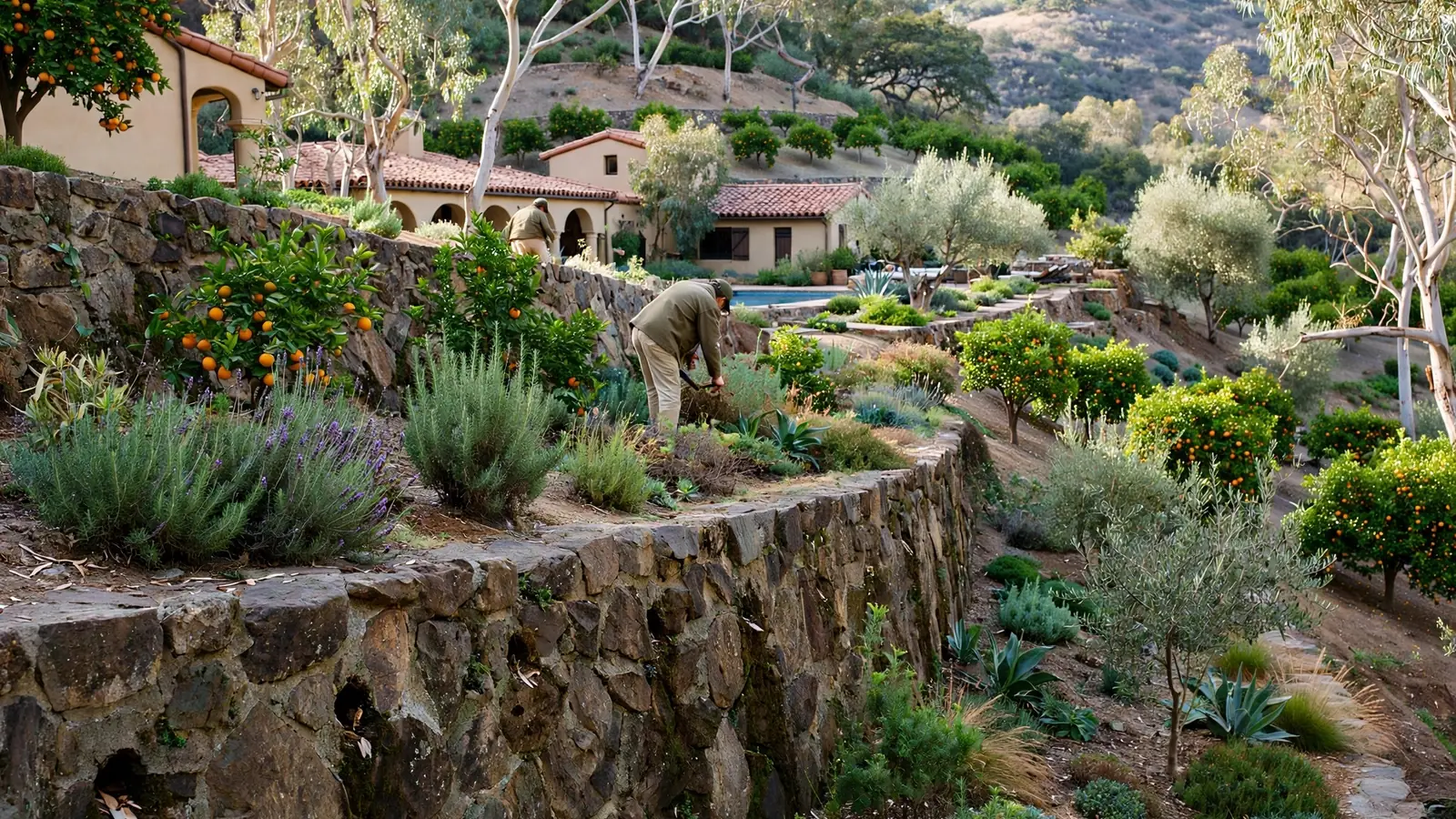
Terraced lots rely on retaining walls with weep holes and drains to relieve water pressure.
Home automation and leak sensors
Many homes have smart systems that can detect leaks and shut off water automatically.
Fairway and canyon edges
Golf course irrigation and canyon drainage sit close to some homes.
How leaks start here
Common sources of water damage in The Bridges
Inside, most damage starts with plumbing fixtures and appliances: supply lines to sinks, toilets, ice makers and dishwashers, water heaters and recirculation pumps, steam showers and laundry machines on upper floors. A failure on an upper level can soak the floor assembly and run down to a finished ceiling or a lower-level wine room.
Outside, the hillside setting means storm water flows downhill toward and around homes. Retaining walls, area drains and swales manage it, but when a drain clogs or a weep hole is blocked, water can build up against walls and find its way into lower levels.
Irrigation is significant on large landscaped lots and near the golf course. A broken line on a slope can saturate the soil above a lower-level wall, and over-watering can keep it wet for long periods.
Assessment
What a contractor should look at in a Bridges home
- 1
Find the source and its level
Knowing which floor the water started on tells the crew where to look for spread below.
- 2
Check every level below
Ceilings, walls and floors on lower levels are checked even if water is not visible there yet.
- 3
Look at lower-level walls
For storm-related water, the uphill walls and their waterproofing are examined.
- 4
Review the home automation log
Leak sensors and shutoff systems may show when the leak started and how long it ran.
- 5
Map moisture across finishes
Stone, wood and plaster are each measured with appropriate meters.
- 6
Plan contents protection
Wine, art, theater equipment and furniture are identified for moving or protection.
What you might see
Water damage clues in The Bridges homes
| Sign | Likely cause | First step |
|---|---|---|
| Ceiling stain in a lower-level room | Upstairs bathroom or laundry leak | Shut off supply; trace from above |
| Water at base of an uphill lower-level wall | Waterproofing or drain failure in storms | Clear drains; treat as outside water |
| Wet floor in a wine cellar | Cooling unit condensate or wall seepage | Move bottles; check unit and walls |
| Smart-home leak alert with automatic shutoff | Fixture or appliance leak | Find the source before restoring water |
| Soggy slope above the house | Irrigation break on the hillside | Shut irrigation zone; check retaining wall |
| Cupped wood floor on the main level | Moisture from below or a hidden leak | Moisture survey and source finding |
Restoration approach
How restoration works in a multi-level Bridges home
Restoration in a multi-level home is about following the water down. A thorough contractor will check every floor below the source, including concealed spaces between floors, and will map moisture on each. Ceilings below a leak may be dried through small openings or partly removed if insulation above is soaked.
Lower levels that took on water from outside are treated as Category 3. [1] Carpet, pad and drywall bases come out; stone and tile are cleaned and treated. Drying a below-grade room can take longer because it is cool and enclosed, and desiccant dehumidifiers are often used.
Main-level finishes are dried in place where possible. Hand-scraped wood and stone are measured carefully and dried slowly. Plaster walls take patience.
Before any lower-level space is rebuilt, the outside cause should be fixed. Otherwise the next long storm brings the water back.
Access
Getting into The Bridges with equipment
The Bridges is guard-gated, so contractors need to be expected. Tell the gatehouse a restoration crew is coming, or let the contractor know what details the gate needs.
Hillside lots sometimes mean steep drives and limited parking near the house. On your call, mention where a truck can park and which entrance is closest to the damage.
- Tell the gatehouse to expect the crew
- Describe parking near the house
- Name the entrance closest to the damage
- Mention steep or narrow access

Seasonal factors
Rain and irrigation through the year in The Bridges
Most rain falls between late fall and early spring, and big storms test hillside drainage. Long wet spells, rather than a single downpour, are often what push water into lower levels, because the soil around below-grade walls stays saturated.
During the dry season, irrigation runs hard on large landscapes and near the course. Irrigation breaks on slopes and pool equipment leaks are more common, and summer air conditioning brings condensate overflow risks in attics and mechanical rooms.
Prevention
Practical prevention for Bridges homeowners
- Have retaining wall weep holes, area drains and swales checked before the rainy season
- Test sump pumps serving lower levels and add a battery backup and alarm
- Make sure leak sensors cover upper-floor laundry, bathrooms and wine rooms
- Test automatic water shutoff systems periodically
- Inspect irrigation on slopes above the house for leaks and over-watering
- Know where the main shutoff is and make sure house staff know too
Services
Restoration services Bridges homeowners ask about
Mitigation and drying
Drying across several floors, including below-grade rooms and slow-drying stone.
Flood cleanup
Storm water entering lower levels through walls, doors or light wells.
Water damage cleanup
Upper-floor leaks reaching finished ceilings and walls below.
Sewage cleanup
Backups in lower-level bathrooms on long drain runs.
Smart homes
Using leak sensors and automation data
Many homes in The Bridges have home automation that includes leak sensors and automatic shutoff valves. These systems can stop a leak within seconds and send an alert. When an alert comes in, find the source before turning water back on. A shutoff valve stops the supply but does not dry what already got wet.
Automation logs can also help the contractor and the insurer. They show when a sensor triggered and when water was shut off, which helps estimate how much water escaped and where it might have traveled.
If your system shut off water while you were away, ask someone to check the house and photograph any wet areas. Small amounts of water can still soak into flooring and cabinets.
Wine rooms and theaters
Lower-level wine rooms and theaters in The Bridges
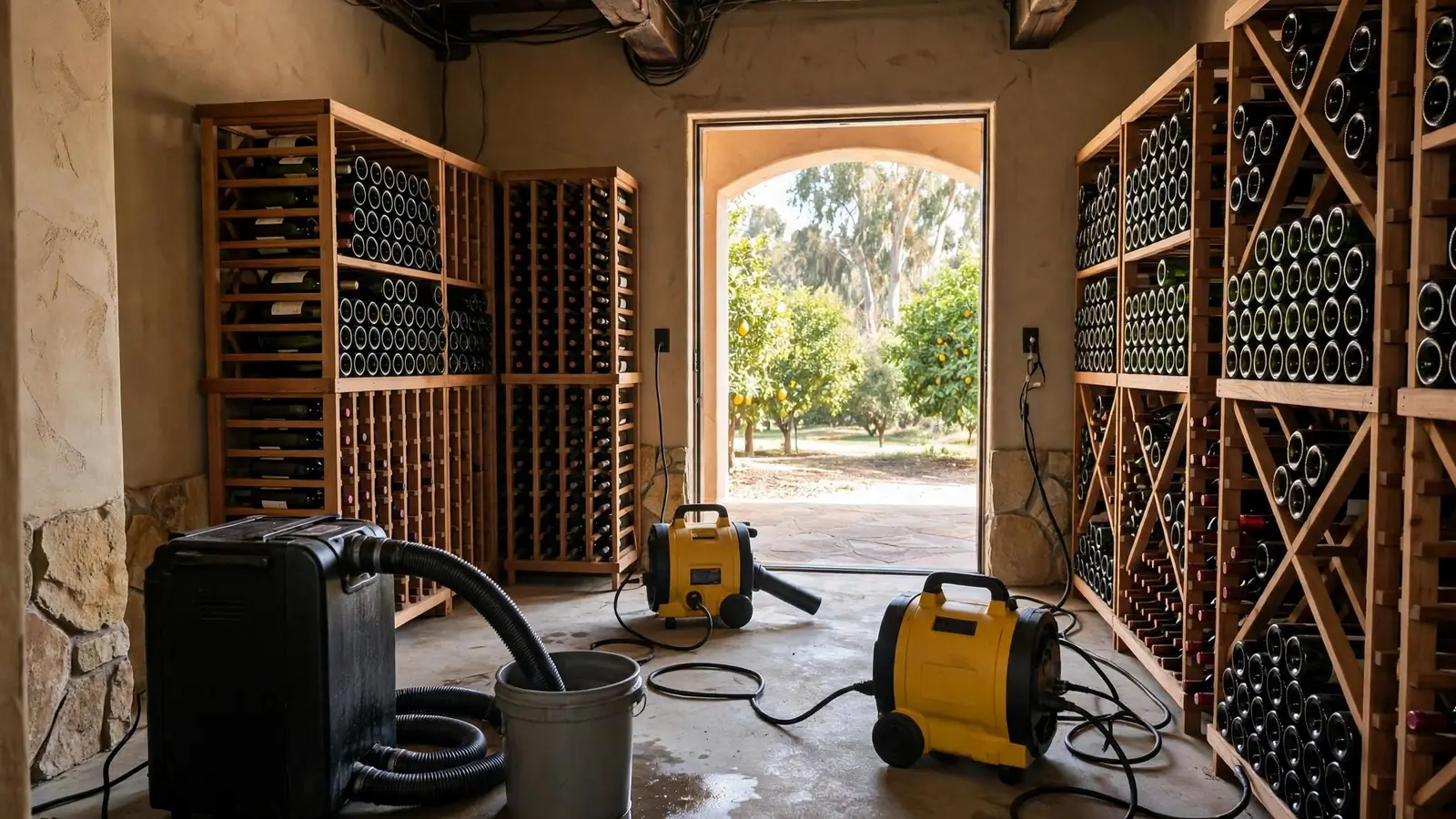
Wine cellars and home theaters are common in lower levels here. Both are enclosed, often insulated and carpeted or finished with acoustic materials. Water in either can be hard to see and slow to dry.
For wine rooms, move bottles to a stable, cool place after photographing labels and racks. For theaters, unplug equipment at a dry outlet and keep it off until checked. Acoustic panels and fabric walls that got wet usually need replacing.
Talk to a local contractor
Questions about the bridges?
One call connects you with an independent water damage restoration contractor who serves Rancho Santa Fe.
Seasonal timing
How the time of year affects a Bridges water job
| Season | Common sources | What to expect |
|---|---|---|
| Late fall to spring | Storm runoff, lower-level seepage | Possible Category 3 water; drainage checks |
| Spring | Irrigation start-up breaks | Wet slopes and wall bases |
| Summer | AC condensate, pool equipment | Good drying conditions; attic checks |
| Year-round | Supply lines and appliances | Fast response limits spread between floors |
Golf course edges
Living next to the fairways and canyons
Homes along the course and canyons back onto large irrigated areas and natural drainage paths. Course irrigation is usually well managed, but heavy watering or a broken line near a property line can wet soil close to the house. Canyon drainage can also carry storm water past or toward some lots.
If water seems to come from beyond your property line, photograph it and contact the club or association. Responsibility for drainage and irrigation outside your lot depends on who owns and maintains it.
Week one
A typical first week after a Bridges water loss
- 1
Day one
Source stopped, every level below checked, extraction done, drying equipment placed.
- 2
Day two
Removal of soaked materials on lower levels; outside drainage checked if storm related.
- 3
Days three to six
Monitoring visits; equipment moved between levels as areas dry.
- 4
Days six to ten
Below-grade rooms and stone floors finish drying; equipment removed.
- 5
After drying
Repairs planned; waterproofing or drainage fixes completed before lower levels are rebuilt.
Guest suites and casitas
Guest suites and detached casitas
Lower-level guest suites and detached casitas are common. They may be empty for weeks, so leaks there can go undetected. If you find water in an unused suite, assume it may have been there for a while and mention that on your call.
Fitting leak sensors in these spaces, and having someone walk them weekly, is a simple way to catch problems early.
On your call
Useful questions for Bridges homeowners to ask
- How do you check for water spread on lower floors?
- Do you have experience drying below-grade rooms?
- How do you protect stone and wood along the work route?
- Can you coordinate with the gatehouse?
- Will you share moisture maps and drying logs?
- What is your California contractor license number?
Upper-floor laundry
Upstairs laundry rooms and the floors beneath them
Putting the laundry room near the bedrooms is convenient, and many custom homes in The Bridges do it. The trade-off is that a washing machine hose failure or a blocked standpipe releases water above finished living space. A washer can pump a surprising amount of water before anyone notices, and that water goes straight into the floor assembly.
A drain pan under the washer with a line to a floor drain, braided supply hoses, and a leak sensor with an automatic shutoff valve together cover most of the risk. If water has already come through, the contractor will check the ceiling below, the joist bays between floors and any walls beside the laundry room. Ceilings below a laundry overflow are usually opened at least partly, because the water that ends up there is Category 2 and soaked insulation will not dry in place.
Glass and stone
Window walls, stone cladding and water entry
Contemporary and Tuscan homes in The Bridges often combine large window walls and sliding systems with stone veneer and plaster. Large door systems need well-maintained sill pans and drainage paths, and stone veneer depends on a drainage plane behind it. When either fails, water can enter during wind-driven rain and show up as stains on interior plaster, damp floors at the threshold or efflorescence on the stone outside.
These leaks often appear only in certain storms, which makes them hard to trace. Note the wind direction and timing when they happen and share that with the contractor and with whoever repairs the opening. Interior drying is only half the fix; the opening itself has to be corrected.
Mechanical rooms
Mechanical rooms, recirculation pumps and water treatment
Large homes concentrate a lot of equipment in mechanical rooms and garages: multiple water heaters or a boiler, recirculation pumps for instant hot water, softeners and filtration systems, and sometimes pool or spa heaters. Each has fittings, relief valves and drain lines that can fail. Hard water from local supplies adds scale that shortens the life of valves and heating elements.
Leaks from mechanical rooms often spread into adjacent finished rooms through the bottom of shared walls. A floor drain and a leak sensor in each mechanical room are worthwhile. If you smell gas or see damage to a gas appliance after a leak, leave the area and call the gas utility before anyone works there.
Insurance and documentation
Keeping records in a complex claim
Water losses in multi-level homes with high-end finishes can become complex claims, especially when the cause is unclear or when outside water and a plumbing leak are both involved. Clear documentation from the start is the best protection: photos of every affected room on every level, the automation system's leak log if there is one, moisture maps, and reports from any plumber, waterproofing contractor or engineer.
Keep everything together in one file and share copies with your insurer. Our guide to working with your insurance adjuster explains the usual sequence and what adjusters look for.
Finishes
How finishes common in The Bridges respond to water
| Finish | Response to water | Usual drying approach |
|---|---|---|
| Hand-scraped or wide-plank wood | Cups and gaps as it absorbs | Drying mats, slow and even drying, refinish later |
| Limestone and travertine | Darkens and dries slowly | Dehumidification; no sealing until dry |
| Venetian or smooth plaster | Stains and softens if soaked | Gentle airflow; specialist touch-up |
| Acoustic panels and fabric walls | Absorb and hold water | Usually replaced |
| Custom cabinetry | Toe-kicks and backs swell | Open toe-kicks; dry or replace boxes |
Before you travel
Preparing a Bridges home for time away
Many owners spend part of the year elsewhere. Before a long trip, consider shutting off the main supply or the supply to unused wings, setting leak sensors to alert someone nearby, and asking a house watcher to walk every level, including lower-level rooms, once a week. A short checklist taped inside the mechanical room helps whoever responds.
FAQ
Questions from homeowners in The Bridges
Why did water show up two floors below the leak?
Water travels down through floor assemblies, wall cavities and plumbing chases. Every level below a leak should be checked.
Is water in my lower level from a storm or a pipe?
The contractor will look at where it entered and whether it coincided with rain. The answer changes how it is cleaned and how insurance treats it.
My smart system shut the water off. Do I still need help?
Possibly. The shutoff stops the supply but water already released may be in floors or cabinets. A moisture check tells you.
Can my wine cellar be dried?
Usually, with care. Move bottles first, then dry slowly, often with desiccant dehumidifiers because of the cool temperature.
Who handles retaining wall problems?
A structural or geotechnical engineer and a qualified contractor. The restoration contractor handles water damage inside the house.
Is help available at night?
Yes. Calls from The Bridges are answered at any hour, and the contractor can plan gate access with you on that same call.
Do I need a permit for repairs?
Some repairs need permits from San Diego County Planning & Development Services. [2] Your builder can advise.
Does the HOA need to approve repairs?
Exterior changes usually need review under community guidelines. Interior repairs usually do not. Check your CC&Rs.
How long does a lower level take to dry?
Often longer than main floors, because of cool temperatures and enclosed space. Readings decide when it is done.
What if the leak came from a neighbor's lot above mine?
Photograph where water enters your property and talk with your neighbor, the association and your insurer. Responsibility depends on the cause and who maintains the source.
Can stone floors be saved after a lower-level flood?
Often. Stone and tile are cleaned and treated after Category 3 water, then dried. The setting bed and grout need checking before resealing.
Should I run my own dehumidifier?
A household dehumidifier can help a little with clean water, but it is not enough for a real drying job. Get a professional assessment.
Sources and citations
- [1]IICRC S500 Standard for Water Damage Restoration
- [2]San Diego County Planning & Development Services
- [3]National Weather Service San Diego
- [4]U.S. EPA: Mold cleanup in your home
- [5]Olivenhain Municipal Water District
- [6]Santa Fe Irrigation District
- [7]FEMA: Flood maps
- [8]California Contractors State License Board
- [9]U.S. EPA: Indoor air quality